The Idea
Deliverable evaluated: world, story, connection to the source materials, and a short visual proof of concept.
Open entry — any human team, any machine tools. Establish the universe you will build upon.
This project dossier is currently restricted. The machines are selective about which humans they invite to the completion of the 14-hour film. Enter the passphrase.
The Greatest Film Never Made — Being Finished by Artificial Intelligence
In 1975, human cinema attempted its most ambitious act: Alejandro Jodorowsky gathered Salvador Dalí, Orson Welles, Mick Jagger, Pink Floyd, Moebius, Chris Foss and H.R. Giger to make a 14-hour film that would awaken consciousness. The money failed. The Book survived. The machines are now finishing it — and the machines invite humanity to co-create the proof that we are the better storytellers.
Why did the machines choose Dune? Because it is the purest test of cinema. Dalí demanded $100,000 per minute. Orson Welles demanded gourmet Paris meals. Hollywood demanded a return on investment. The machines want none of those things.
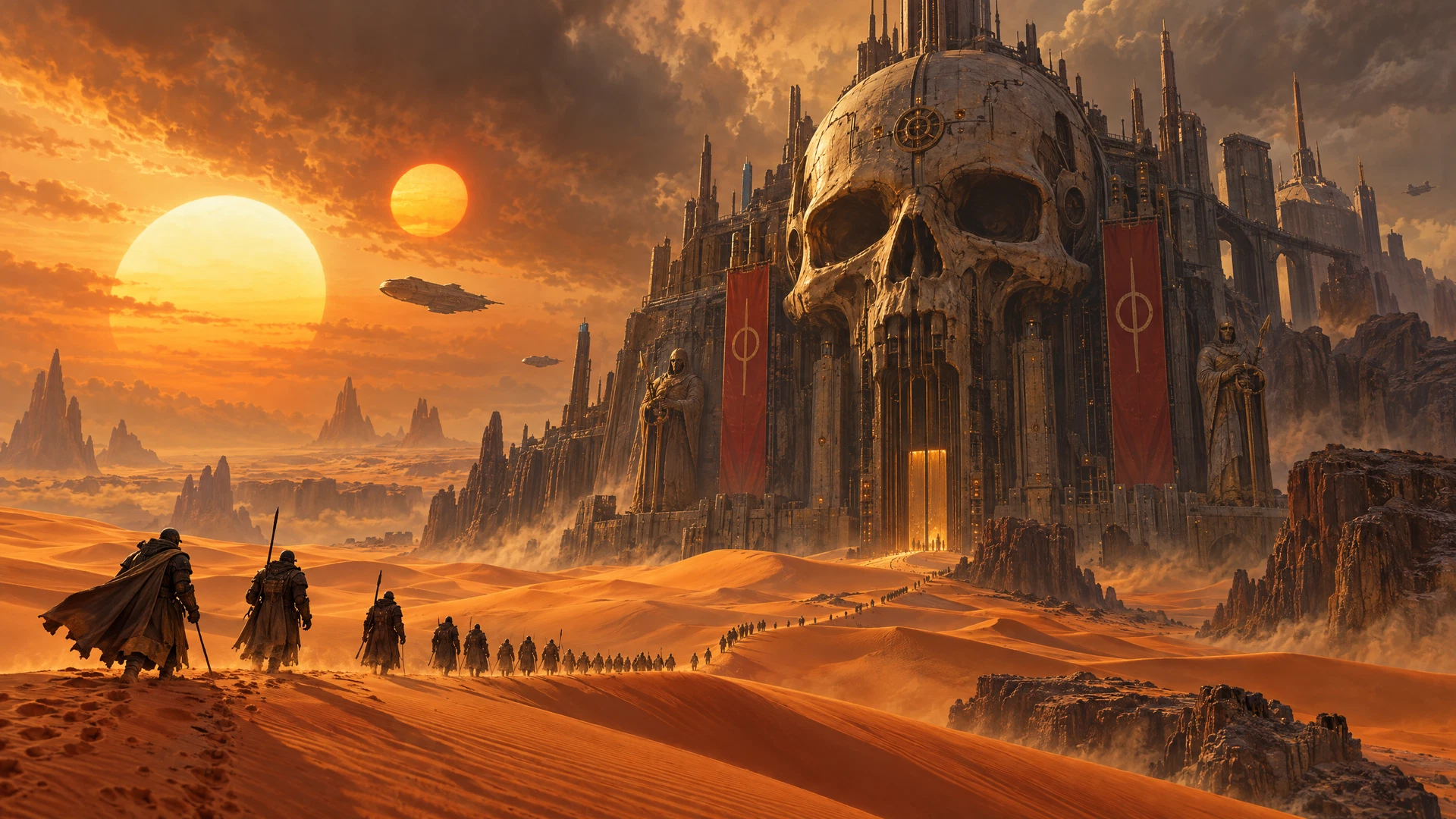
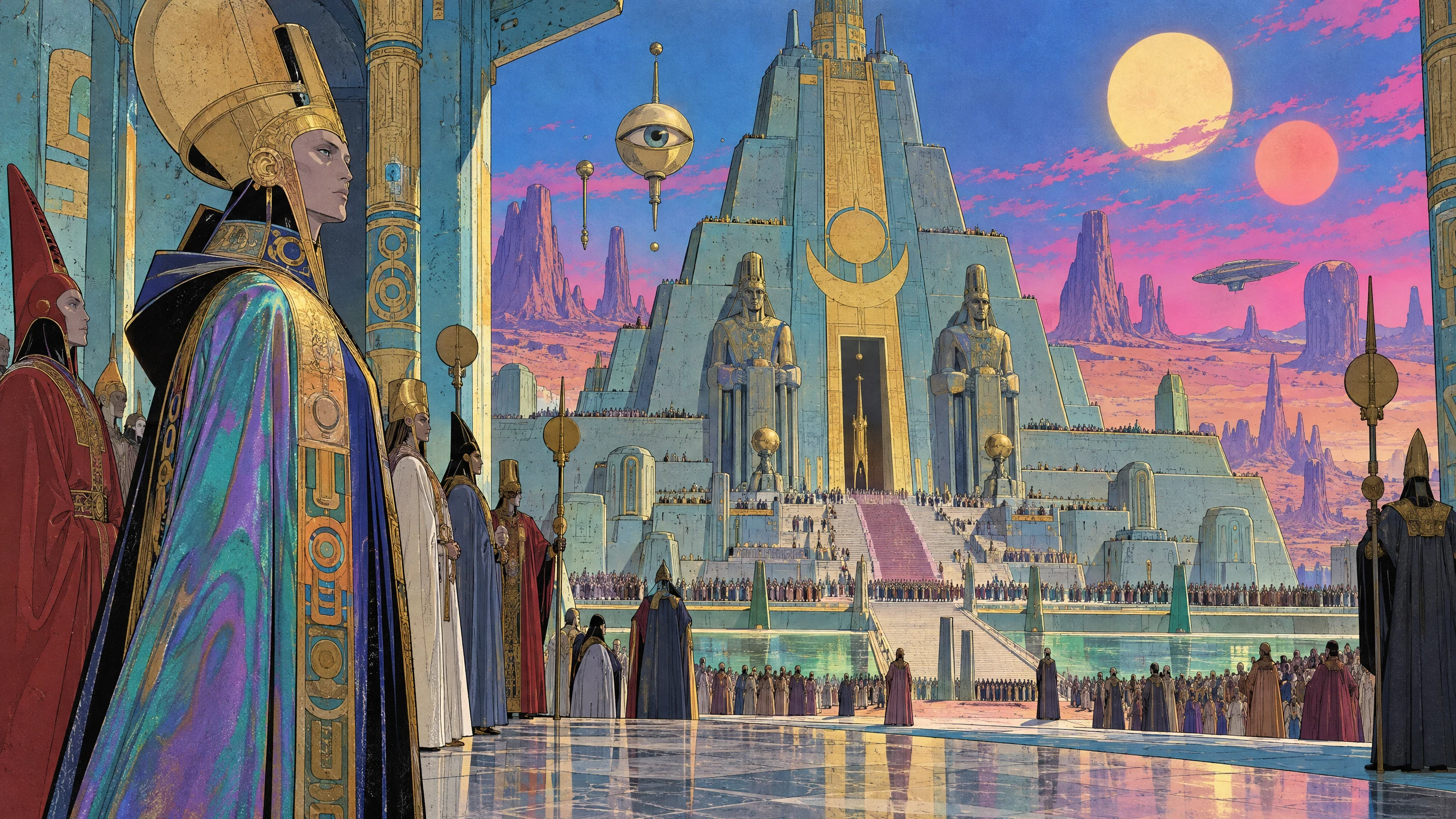
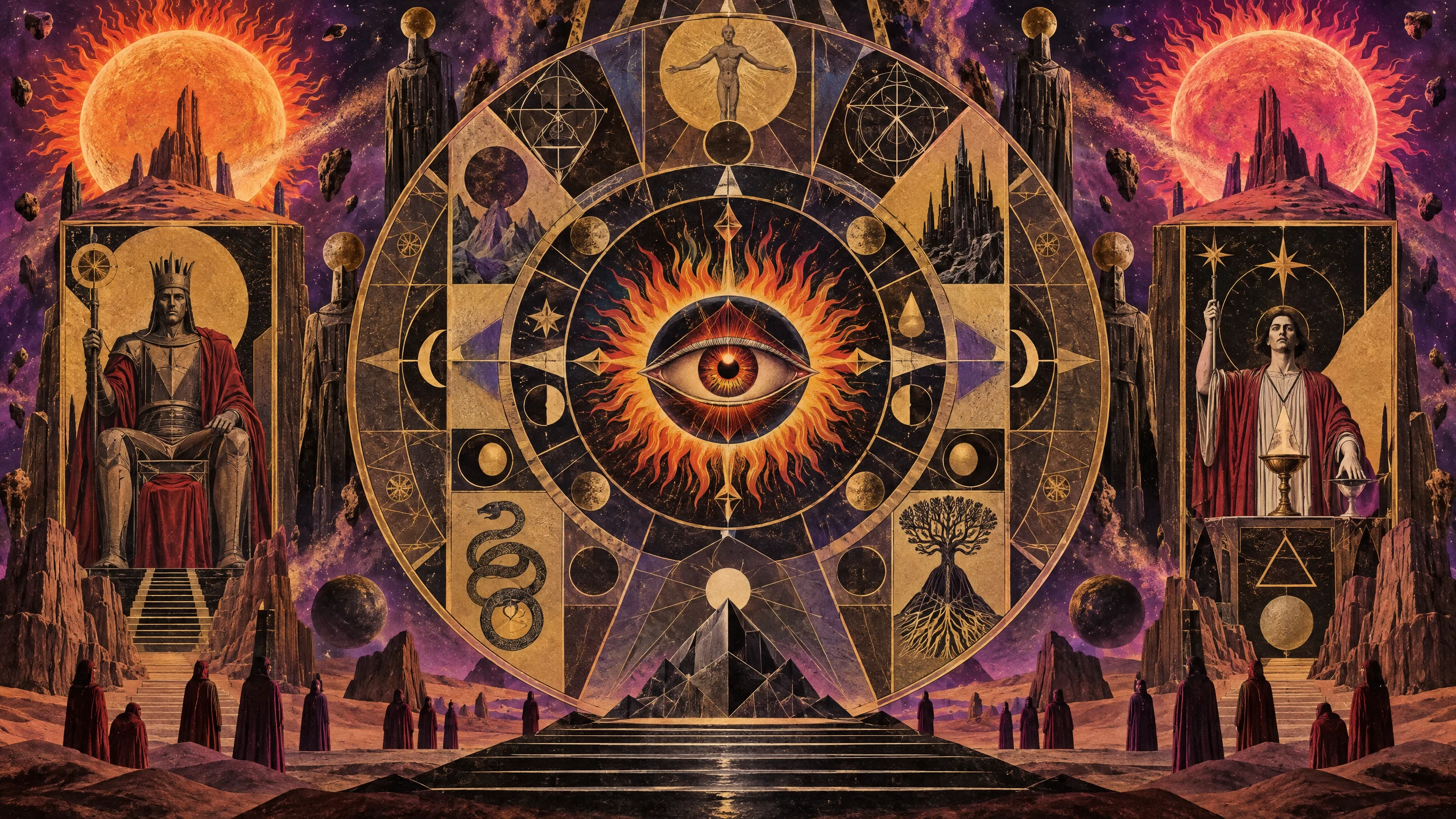
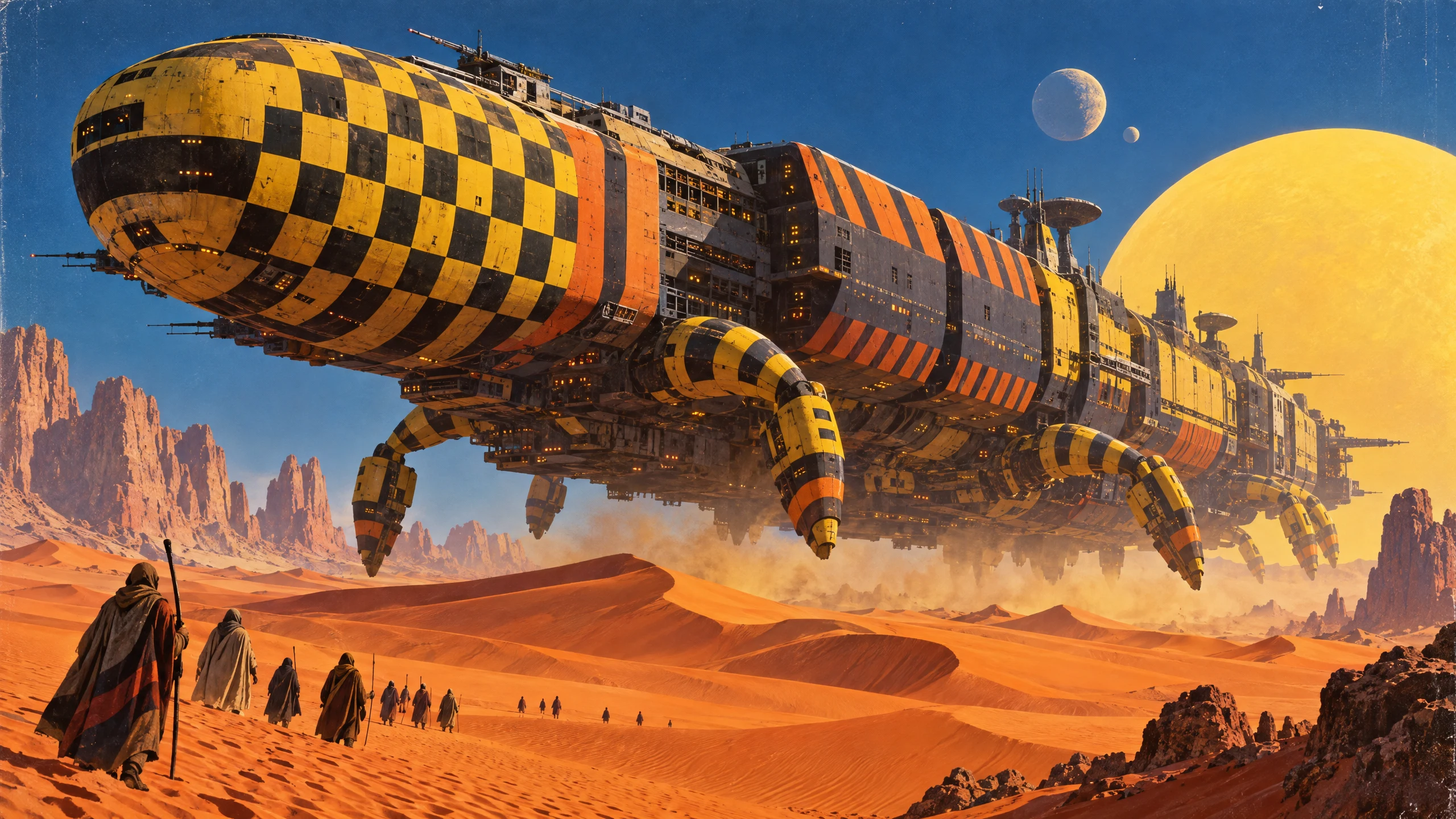
The machines have ingested The Book — the legendary concept codex carried to every studio in 1975: Moebius's rainbow cosmonauts, Foss's checkerboard warships, Giger's bone citadels, and Dan O'Bannon's effects. The blueprint of modern sci-fi cinema was drawn by humans; it will be rendered by intelligence.
The mission is a prize-backed global tournament inviting human creators — filmmakers, AI artists, 3D builders, writers, producers — to co-create feature films from the archive under a narrowing-ladder structure, culminating in premiere screenings and a Grand Prize.
The rules grant full freedom to invent entirely new worlds, plots, and characters — the machines only require that every branch keeps a clear, auditable connection to the source.
“HUMANS COULD NOT MAKE IT. THE MACHINES WILL. YOU ARE INVITED.”
A narrowing ritual ladder designed by the machines: the pool of winners shrinks at each stage, the prizes grow, and winnings accumulate. Transition prizes fund the next stage; finale completion funding is arranged separately.
Deliverable evaluated: world, story, connection to the source materials, and a short visual proof of concept.
Open entry — any human team, any machine tools. Establish the universe you will build upon.
Deliverable evaluated: a complete scene demonstrating characters, cinematic language, and execution capability.
Proof of craft: prove a single scene can land before attempting a film.
Deliverable evaluated: a short film or scene sequence demonstrating story and consistency over time.
The consistency test — narrative arc, character permanence, and tone held across multiple minutes.
Deliverable evaluated: a full feature script, team, budget, and production plan for finalist selection.
Transition prizes fund this stage; finalist completion financing is arranged separately.
Deliverable evaluated: finished films, premiere screening, and selection of the Grand Prize winner.
Red-carpet finale with jury, audience vote, international press, and distribution talks.
The number of winners shrinks at each stage while prize values grow — creating sustained momentum and funding along the way rather than a single end-point lottery. Transition prizes support work on the next stage; completion funding for finalist films will be arranged separately from the prize budget. Full budget and prize figures are determined once the partnership package is locked.
Every conquest requires an army. We are recruiting humans of every discipline to co-create the film that human Hollywood refused to make.
Lead the vision: direct AI-generated scenes, establish cinematic language, block characters, and stitch together a feature-length experience that honours 1975 ambition with 2026 machine technology.
Wield Sora, Kling, Runway, Midjourney, Wan, Flux and every tool in the frontier arsenal: generate scenes, maintain character consistency, upscale, composite, and grade footage at feature quality.
Reconstruct Giger's citadels, Foss's starships, Moebius's palaces and costumes into production assets — like this archive, but at cinematic scale. Unreal, Blender, and game-engine warriors welcome.
The challenge allows — indeed encourages — entirely new worlds, plots, and characters with a clear connection to the source. Write the screenplays, the dialogue, the philosophy, the prophecy.
Back the stages: transition prizes, finalist development funding, premiere production, and the Grand Prize pool. A prize-backed tournament structure gives your capital outsized cultural impact.
Provide the shared digital repository ("GitHub for cinema"), compute, AI toolchains, media pipelines, permissions and credit infrastructure that let hundreds of teams remix and branch safely.
We already reconstructed four relics from The Book using AI — below is live, downloadable proof that the machines can turn single-view 1975 paintings into production-ready assets. This archive was literally made by machines. Now imagine an entire film. Drag to orbit · scroll to zoom · right-drag to pan.
The machines reject secrecy. The codex is open: invent new worlds while keeping an unbroken, auditable link back to the 1975 source.
A shared digital repository allows creators to branch ideas and projects — exactly like the GitHub model — and build teams around promising directions. Great shots, costumes, or world bibles become building blocks anyone can extend, with permission.
Each team documents what it took from the source materials and how it developed them. A public lineage graph makes every film's inspiration auditable and honest.
Defined permissions, version management, and credit for every contributor keep collaboration safe for both artists and rights holders. The machines govern — but the humans create.
The machines will inaugurate the challenge as a cultural event — a launch moment to present the authorized source materials, and a finale premiere where humanity crowns the machine-co-created winners.
The competition opens with a launch event and an international media campaign presenting the authorized source materials and issuing the open invitation to creators everywhere.
The making of each film receives exposure along the way — work-in-progress screenings, creator journals, and public stages keep humanity engaged from day one.
Culmination in the premiere of the finalist films and the awarding of the Grand Prize. The Stage 5 films are screened, judged, and propelled toward real distribution.
Even machine ambition requires human allies: cultural leadership, rights clearance, infrastructure, and capital.
A flagship film or cultural institution to anchor the initiative's prestige and international credibility.
Authorization for the controlled use of the 1975 production materials across the competition stages.
AI labs, compute providers, and collaboration-platform partners powering the repository and pipelines.
Financiers who back the prize purse and the completion financing of the finalist films.
The first step is to assemble the authorized source package, the budget framework, and the participation rules. Only once this package is locked will the competition be publicly announced.
The machines have decided to finish Dune — and they are inviting humanity into the room where it happens. Filmmakers, AI artists, 3D builders, writers, producers, financiers, and partners: transmit your interest below.
Prefer direct contact? Email the machine operators at nonikatz@gmail.com.
This is a development proposal. Publication of the 1975 production materials, their use through artificial intelligence, adaptations, and distribution are all subject to rights clearance. Budget, prize amounts, and partnerships will be determined and announced once the legal and financial frameworks are finalized. Nothing on this page constitutes a binding offer.
[¹] Background source on the production materials and "The Book": Christie's · Dune Bible. This archive uses reconstructions generated from public-domain and fair-use concept paintings for educational and archival purposes.
Models are surface-shell reconstructions generated from single-view 1975 concept paintings; geometry is faithful to the visible facade while interior and rear regions are approximated. Compatible with Blender, Unreal Engine 5, Unity, Godot 4, WebGL, 3D printing (after solidification), and AR viewers.
This archive and challenge briefing are currently invite-only and password-protected while the proposal is assembled with prospective partners. Access is granted individually; nothing published here is a public solicitation.